

Top Qualities to Look for in an Expert SEO Firm in 2026
Aug 20, 2026


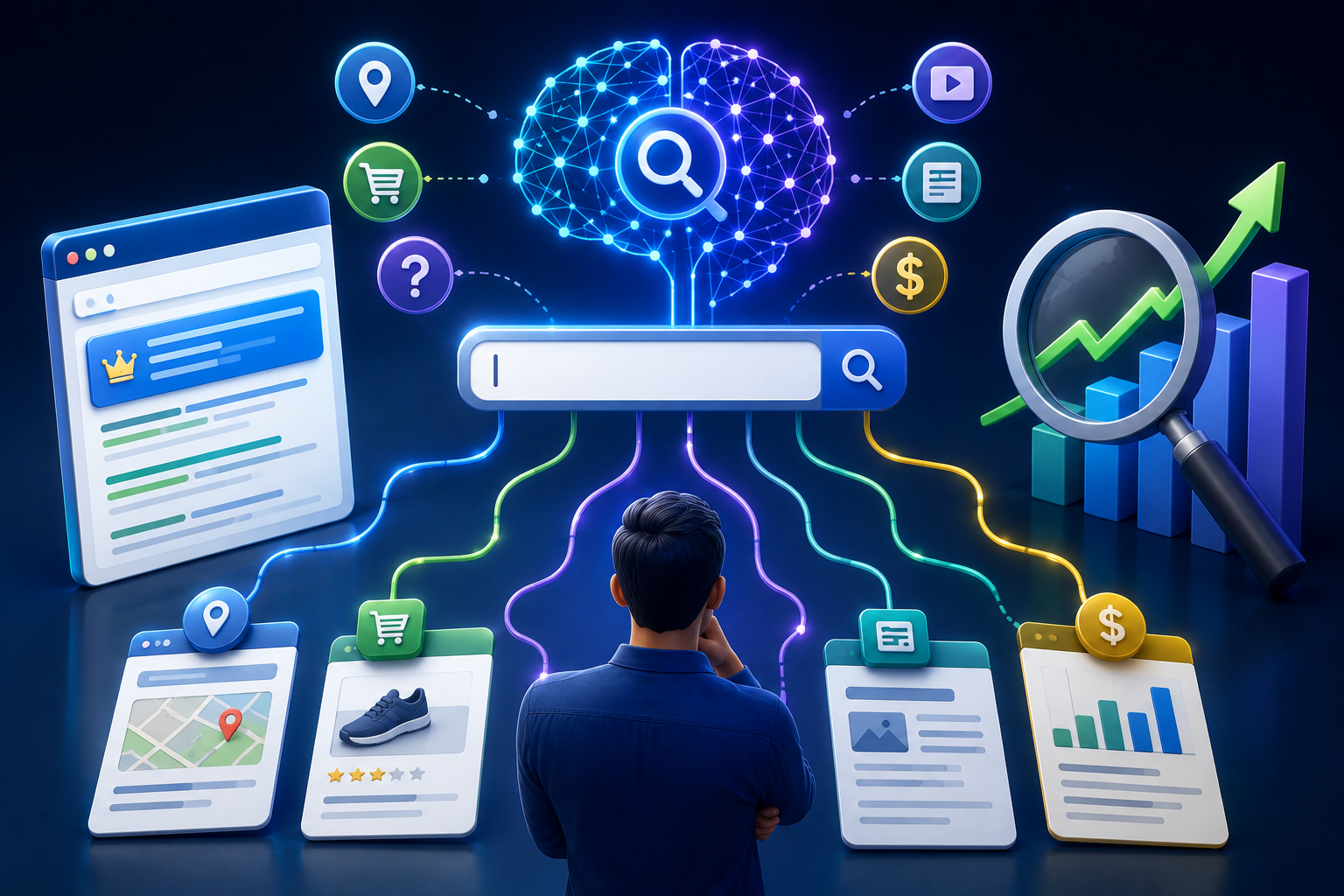
Search intent has always been one of the most important factors in SEO. For years, marketers categorized searches into four primary groups: informational, navigational, commercial, and transactional. If a website matched the user’s intent, it had a strong chance of ranking and converting visitors into customers.
However, the search landscape has changed dramatically. Search engines are no longer simply matching keywords to web pages. Today, AI-powered search systems analyze context, behavior, relationships between topics, and even likely future actions before determining which results deserve visibility.
As a result, search intent has become far more complex than traditional SEO models suggest.
Modern users rarely follow a straightforward path from search to conversion. They move across devices, platforms, and channels while interacting with AI-generated answers, videos, reviews, forums, social media content, and business websites. A single query can represent multiple intentions simultaneously.
This shift has made search intent analysis more challenging but also more valuable than ever. Businesses that understand evolving user intent can create content that satisfies both search engines and customers. This is why many organizations invest in Custom SEO Services to better understand audience behavior and align content strategies with modern search expectations.
Search intent refers to the purpose behind a user’s search query.
When someone enters a search term, they have a goal they want to accomplish. Understanding that goal allows search engines to deliver the most relevant results.
Traditionally, search intent has been divided into four categories:
Users are seeking information or answers.
Examples include:
Users want to visit a specific website or brand.
Examples include:
Users are researching solutions before making a decision.
Examples include:
Users are ready to take action.
Examples include:
Search engines use intent signals to determine which pages best satisfy users. The closer a page aligns with user intent, the greater its chances of earning visibility.
Several factors are making search intent increasingly difficult to define.
Modern search engines use artificial intelligence to understand context instead of relying solely on keywords.
A search for “best SEO strategy” may indicate:
AI attempts to identify which intent is most likely based on context and behavior.
People increasingly interact with search engines as if they are having conversations.
Instead of searching:
“SEO trends”
Users may ask:
“What SEO strategies will help businesses stay competitive in 2026?”
This creates more nuanced intent signals.
Users often begin research on one device and complete purchases on another.
A customer might:
Tracking intent across these touchpoints requires advanced analysis.
Search engines increasingly personalize results based on:
Two users searching the same phrase may receive entirely different results.
Consumers no longer rely exclusively on Google.
They use:
Each platform represents a different stage of the user journey.
One of the biggest SEO challenges today is the rise of multi-intent searches.
A user searching for:
“Best SEO software for small businesses”
May simultaneously be:
Traditional SEO approaches often target only one intent category.
Modern optimization requires addressing multiple intent layers within a single content experience.
Businesses using Custom SEO Services frequently develop content that supports entire decision-making journeys rather than isolated search queries.
This approach improves both visibility and conversion potential.
AI search systems are fundamentally changing how intent is understood.
AI-generated summaries often answer multiple questions simultaneously.
Rather than matching exact keywords, these systems analyze:
Search engines increasingly understand entities rather than individual keywords.
For example, AI can recognize relationships between:
This deeper understanding improves intent interpretation.
AI models attempt to predict what users may need next.
Someone researching SEO audits today may soon need:
Search systems increasingly anticipate these future needs.
AI search experiences generate customized responses based on user context.
This means intent is no longer universal.
Instead, search engines evaluate intent at an individual level.
Modern SEO requires comprehensive intent mapping.
Intent mapping involves understanding:
Successful SEO strategies consider every stage of the customer journey.
This includes:
Instead of targeting individual keywords, businesses group related searches based on shared intent.
This creates stronger topical relevance.
Topic mapping helps organizations build authority across entire subject areas.
Search engines increasingly reward websites that provide comprehensive topic coverage.
Understanding how entities connect helps businesses create content that aligns with modern search systems.
This is a major advantage provided by advanced Custom SEO Services.
Many businesses still approach SEO using outdated methods.
Keywords remain important, but they don’t tell the entire story.
Understanding why users search is equally important.
Different users require different information.
Content must align with awareness, consideration, and decision-making stages.
Many websites still create content solely for rankings.
Successful content addresses real user needs and solves meaningful problems.
Even well-ranked pages can fail if they don’t match visitor expectations.
Alignment between intent and content remains critical.
Modern search complexity requires tailored optimization strategies.
This is where Custom SEO Services provide significant value.
Understanding target audiences helps identify motivations, concerns, and behaviors.
Data analysis reveals how users interact with content and navigate websites.
Examining competitors helps uncover content gaps and opportunities.
Businesses can create content that addresses multiple stages of the customer journey.
Matching content with intent improves lead generation and sales performance.
Advanced SEO strategies now include optimization for AI-generated search experiences.
Organizations investing in Custom SEO Services gain a competitive advantage by aligning their content with modern search behaviors.
An experienced Expert SEO Firm understands that rankings are a byproduct of relevance.
Successful SEO strategies begin with understanding:
By prioritizing intent, businesses create more valuable content experiences.
This often results in:
Rather than chasing rankings alone, an Expert SEO Firm focuses on helping businesses connect with the right audiences at the right moments.
Search intent will continue evolving as technology advances.
Search engines will increasingly anticipate user needs before queries are fully expressed.
AI assistants will become primary discovery channels for many users.
Search experiences will become more tailored to individual preferences and behaviors.
Entities will play a larger role in content discovery and relevance evaluation.
Businesses will focus on optimizing entire customer journeys rather than isolated keywords.
Organizations that adapt early will be better positioned for long-term success.
Search intent is more complex than ever because users, technology, and search platforms are evolving simultaneously. AI-powered search systems now analyze context, behavior, relationships, and future needs rather than simply matching keywords.
As search journeys become more fragmented and personalized, businesses must move beyond traditional SEO tactics. Understanding intent requires deeper analysis, better content strategies, and a stronger focus on customer needs.
This is why Custom SEO Services have become essential for modern businesses. By identifying intent patterns, mapping customer journeys, and optimizing for AI-driven search experiences, organizations can improve both visibility and conversions.
Companies that prioritize search intent today will be better prepared for the future of search tomorrow.
Search intent refers to the purpose behind a user’s search query and what they hope to accomplish.
Search engines prioritize content that best satisfies user intent, making relevance a key ranking factor.
AI helps search engines understand context, behavior, and relationships rather than relying solely on keywords.
Multi-intent keywords represent searches where users may have several goals simultaneously, such as research and purchasing.
Businesses can analyze search behavior, customer journeys, competitor strategies, and engagement data.
Intent helps search engines deliver more useful and accurate results to users.
Custom SEO Services use audience research, intent mapping, and advanced analytics to align content with user needs.
An Expert SEO Firm provides strategic insights, intent analysis, and long-term optimization strategies that improve visibility and conversions.
Ready to better understand your audience and improve your organic search performance?
Our team specializes in Custom SEO Services designed to help businesses navigate evolving search behaviors, optimize for AI-powered search, and build sustainable organic growth strategies.
Whether you need search intent analysis, technical SEO audits, content strategy development, or AI search optimization, we can help create a tailored roadmap for your business goals.
Contact us today to learn how a customized SEO strategy can improve visibility, engagement, and long-term search success.