

Why Do Businesses Need Custom SEO Services for AI Search?
Sep 30, 2026


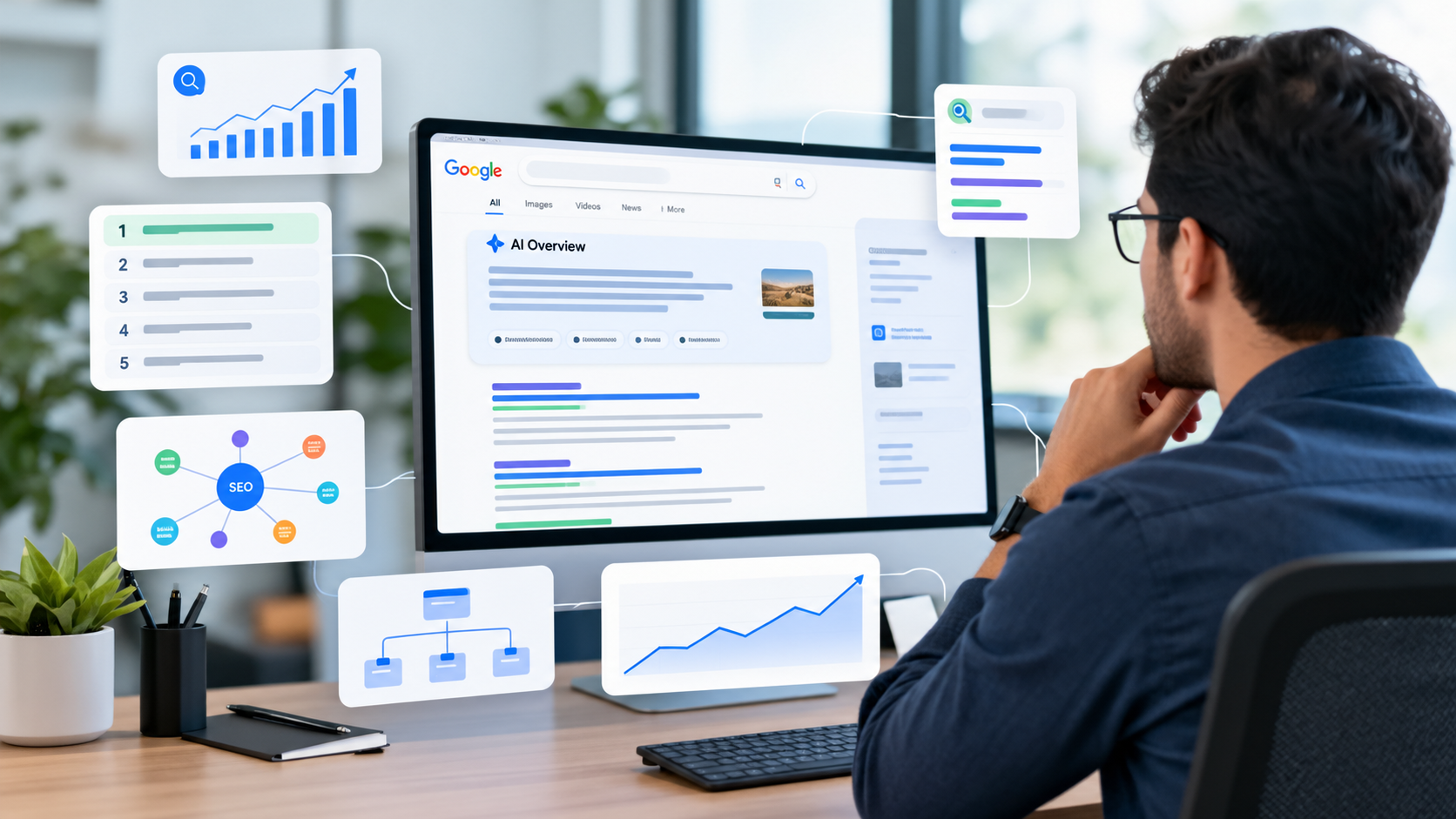
Google Search is changing rapidly. Instead of presenting users with only a traditional list of blue links, Google can now provide AI-generated summaries that bring together information from multiple sources. These experiences, known as Google AI Overviews, can help users understand a topic before deciding which websites to visit.
For businesses, this creates a new search visibility opportunity—but it also changes how SEO should be approached.
Optimizing for AI Overviews is not about finding a secret formula, adding special AI markup, or publishing large quantities of machine-generated content. Google’s current guidance indicates that its generative AI search experiences rely on existing Search systems and indexed web content. Traditional SEO fundamentals therefore remain important.
An Expert SEO Firm can help businesses adapt by combining technical SEO, search-intent research, useful content, website structure, authority signals, and ongoing performance analysis. The objective is to make a website easy for Google to discover, understand, evaluate, and potentially reference when relevant searches trigger AI-generated results.
Google AI Overviews are AI-generated responses that may appear within Google Search for certain queries. Rather than requiring users to open several pages to understand a topic, the feature can provide a summarized response supported by links to relevant web sources.
This means businesses now need to think beyond traditional rankings.
A page can potentially contribute to an AI-generated search experience when its information is relevant, accessible, useful, and supported by strong overall search signals. However, meeting Google’s technical requirements or following SEO best practices does not guarantee that a page will be crawled, indexed, cited, or displayed in an AI Overview.
That distinction is important. A sustainable SEO strategy should focus on improving the overall quality and discoverability of a website rather than promising guaranteed placement in AI-generated results.
Traditional SEO often focuses on ranking for specific keywords. Modern search requires a broader understanding of what users are trying to accomplish.
For example, someone searching for “best SEO strategy for a local business” may want information about:
A strong page should address the underlying need rather than repeat the exact phrase throughout the content.
An Expert SEO Firm can analyze keyword variations, related searches, question-based queries, competitor content, and customer concerns to develop a topic structure around real search behavior.
Instead of creating separate pages for every small keyword variation, a strategic approach can organize closely related questions into useful resources that provide comprehensive coverage.
For businesses looking to strengthen this approach, understanding complex search intent in modern SEO can provide additional context.
AI-powered search often involves longer, more conversational questions.
Users may search:
An SEO strategy should identify these questions and understand the intent behind them.
An Expert SEO Firm can analyze keyword variations, related searches, customer questions, competitor content, and search behavior to identify meaningful opportunities.
This process helps businesses create content that answers actual customer needs instead of producing articles simply because a keyword has search volume.
The result is a more useful content ecosystem that can address informational, commercial, and transactional search intent.
AI systems need understandable information.
One practical content technique is to answer the primary question directly near the beginning of a section and then provide supporting detail afterward.
For example:
An SEO firm can prepare a website for AI-powered search by improving technical accessibility, aligning content with search intent, answering relevant questions clearly, demonstrating expertise, strengthening internal links, and maintaining accurate, useful information.
The explanation can then expand into examples, supporting evidence, processes, and related questions.
This structure benefits readers because they can quickly identify the answer while still having access to detailed information.
Clear formatting also helps organize complex subjects into understandable sections without relying on repetitive keyword usage.
High-quality content cannot perform effectively if search engines struggle to access or understand the website.
Technical SEO should therefore be part of any AI-search strategy.
An SEO team may review:
A technically healthy website provides search engines with clearer pathways to important content.
Technical improvements should also support the user experience. Fast-loading pages, logical navigation, mobile accessibility, and clean architecture make it easier for visitors to interact with important information.
Businesses looking to strengthen this foundation can explore technical SEO strategies for improving website visibility.
A website that publishes isolated articles around unrelated keywords may struggle to establish clear topical relationships.
A stronger approach is to build content clusters.
For example, an SEO company could create a central resource about local SEO and support it with related content covering:
Internal links can connect these resources so visitors can move naturally from one subject to another.
This structure also helps an SEO team identify content gaps where competitors provide better answers or where customers have unanswered questions.
The objective is not to create hundreds of pages. It is to develop a useful collection of resources that collectively demonstrate depth around important topics.
Publishing content simply because a keyword has search volume is not enough.
AI-powered search makes it increasingly important to create information that genuinely helps users.
Useful content should be:
An Expert SEO Firm can conduct content audits to identify thin pages, outdated information, overlapping articles, weak answers, and missing topical coverage.
The goal should be to improve the usefulness of existing content rather than constantly increasing publishing volume.
Businesses can also review strategies for improving content quality and reducing low-value content.
Structured data helps Google understand certain types of information on a webpage.
Depending on the content, appropriate structured data may describe information such as:
Structured data should accurately describe information that is visible and relevant on the page. It should not be treated as a shortcut for obtaining AI Overview visibility.
Instead, consider it one component of a broader technical SEO strategy.
When implemented correctly, structured data can provide search engines with additional context about eligible content and website entities.
Internal linking is another important component of website architecture.
Instead of linking pages randomly, connect them according to topical relationships.
For example, an article discussing technical SEO can link to a related resource about website visibility, while a content strategy article can connect to information about search intent.
Descriptive anchor text gives users additional context about the destination.
This is particularly useful when a website contains many related resources. A logical internal linking structure can help visitors discover additional information while creating clearer relationships between important pages.
For an additional perspective, businesses can review how SEO firms adapt strategies to changing search algorithms.
AI-generated search experiences need reliable information.
For service businesses, this means clearly communicating who you are, what you do, where you operate, and why customers should consider your business.
A strong website can demonstrate credibility through:
The goal is not to add credibility statements simply for SEO.
Every trust signal should have a genuine purpose for the visitor and should accurately represent the business.
Although AI Overviews are different from Featured Snippets, clear answer formatting remains useful.
Question-based headings followed by concise explanations can make information easier to understand.
Useful formats include:
Definition
Explain a concept in a short, direct paragraph.
Process
Use numbered steps when explaining how something works.
Comparison
Use tables when users need to compare clearly defined options.
Questions
Answer common customer concerns using descriptive headings.
The guide to optimizing content for Google’s Featured Snippets provides additional guidance on question-based content, concise answers, lists, and structured formatting.
The key is not to format every page mechanically. Structure should serve the reader first.
SEO should not stop after content is published.
An SEO team should monitor organic performance and investigate how pages perform across modern Search experiences.
Businesses can monitor:
Performance data can then guide the next round of optimization.
Rather than assuming that one content update will produce permanent results, ongoing analysis allows businesses to identify what is working, where visibility is changing, and which pages deserve additional attention.
Every business has a different website, audience, competitive environment, and content library.
That is why Custom SEO Services can be useful when preparing for AI-powered search.
A customized strategy can combine:
The emphasis should remain on improving the website as a whole rather than chasing a single Google feature.
A responsible SEO strategy should also identify approaches that are unlikely to provide sustainable value.
Avoid relying on:
Google’s current guidance does not indicate that websites need special AI-specific markup or files simply to appear in its generative AI search experiences.
The better approach is to strengthen the fundamentals that make a website useful, accessible, trustworthy, and understandable.
Google AI Overviews are changing how people discover information, but the fundamentals of good SEO remain important.
If your website needs stronger technical SEO, better content organization, improved search-intent targeting, or a strategy designed around your specific market, Custom SEO Services can provide a more focused path forward.
Work with an Expert SEO Firm that can evaluate your existing website, identify search opportunities, improve content quality, strengthen technical foundations, and continuously monitor performance as search evolves.
Google AI Overviews are AI-generated summaries that can appear in Google Search for certain queries. They synthesize information from relevant sources and can include links that allow users to explore the underlying webpages.
No. SEO professionals can optimize technical accessibility, content quality, search intent, and website structure, but Google determines when AI Overviews appear and which sources are used. Following SEO best practices does not guarantee inclusion.
No special AI-specific markup is required simply to appear in Google’s generative AI search experiences. Standard SEO fundamentals, technical accessibility, useful content, and Search eligibility remain important.
Yes. Technical SEO, useful content, search intent, website accessibility, internal linking, and other established practices remain relevant because AI-powered search experiences continue to rely on information available through Google’s Search ecosystem.
Custom SEO Services can combine technical audits, content optimization, search-intent research, internal linking, structured data, topical development, competitor analysis, and performance monitoring according to a website’s specific goals.
Structured data is not a universal requirement for appearing in AI Overviews. Where supported, it can help Google understand page content, but it should accurately represent visible information and form part of a broader SEO strategy.
Businesses can monitor Search Console performance alongside organic traffic, queries, impressions, clicks, landing-page activity, and conversions. These measurements can help identify changes in search visibility and content performance.
An Expert SEO Firm can bring together technical SEO, content strategy, search-intent research, internal linking, authority development, and performance analysis. This creates a broader optimization process rather than relying on one tactic for AI visibility.