

Why Do Businesses Need Custom SEO Services for AI Search?
Sep 30, 2026


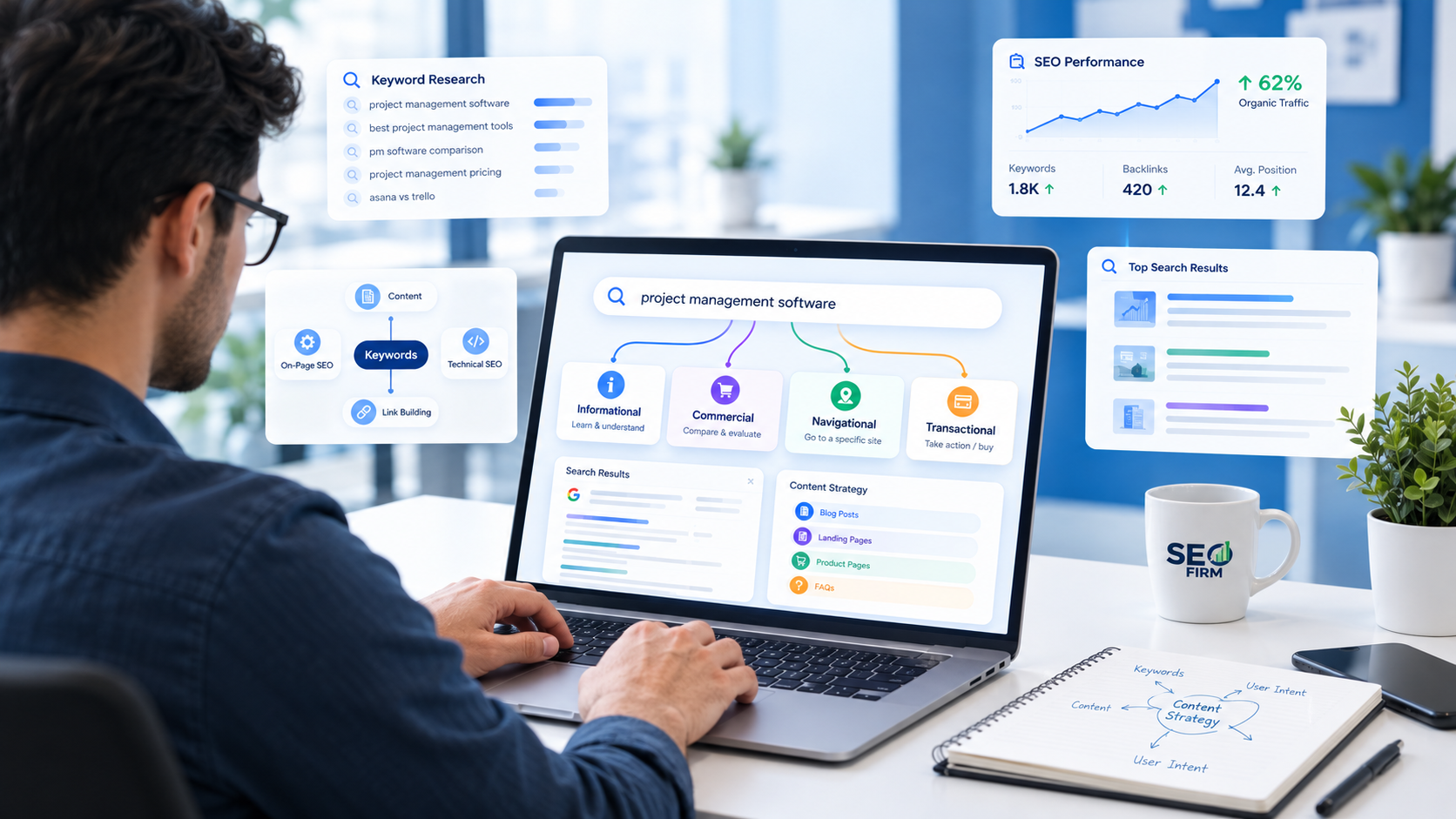
Search engines have changed from simple keyword-matching systems into sophisticated platforms that try to understand what users actually want. When someone searches for a product, service, answer, comparison, or solution, the words they type are only part of the story. The real objective behind that query is search intent.
For businesses, this means ranking for a keyword is not enough. Your page also needs to provide the information, solution, or next step that matches the visitor’s expectations.
This is where Custom SEO Services become important.
Instead of applying the same optimization checklist to every website, a customized SEO strategy considers your industry, audience, competitors, services, website structure, content, customer journey, and business objectives.
An Expert SEO Firm can use these factors to build a search strategy that connects keywords with genuine user needs. The result is a website designed not merely to attract clicks, but to provide relevant experiences at different stages of the search journey.
Search intent is the underlying purpose behind a user’s search query. It explains what someone is trying to accomplish when they enter a phrase into a search engine.
For example, consider these searches:
Although all these searches relate to SEO, they do not represent the same objective.
A person looking for a definition needs educational content. Someone comparing agencies may need service information, proof of expertise, and differentiators. A person ready to contact a provider needs a clear path toward taking action.
This is why search intent should influence how you plan, structure, and optimize every important page.
Search intent is commonly grouped into four broad categories:
Informational intent:
The user wants to understand something, solve a problem, or find an answer.
Navigational intent:
The user wants to reach a particular website, brand, or online destination.
Commercial investigation:
The user is researching available options before making a decision.
Transactional intent:
The user is ready to take an action, such as requesting a quote, booking a service, or making a purchase.
Modern searches can also contain multiple intentions. A person researching an SEO agency, for example, may simultaneously want pricing information, service details, reviews, and evidence of expertise.
SEOS Firm’s discussion of modern search intent also highlights how AI-powered search, conversational queries, personalization, and multi-intent searches have made intent analysis more complex.
Keywords remain an important part of SEO, but they do not provide the complete picture.
Imagine that you target the phrase “local SEO services.” You could include that phrase throughout a page, optimize the title, add related terms, and build links to the URL.
But what happens if the page does not answer what the visitor actually wants?
Perhaps the searcher expects:
Simply repeating the keyword cannot satisfy those expectations.
Intent-focused SEO asks a better question:
Once that is understood, your content can be designed around the answer.
A customized strategy starts by identifying the types of searches your potential customers perform.
Rather than focusing exclusively on search volume, you can examine:
This helps determine whether a keyword should lead to a blog article, service page, comparison guide, location page, FAQ, or another content format.
Search intent often changes as a customer moves toward a decision.
For example, a business owner may initially search:
“Why is my website not getting traffic?”
Later, the same person may search:
“How can SEO improve local visibility?”
Then:
“Custom SEO Services for small businesses”
Eventually, they might search:
“SEO firm consultation.”
These searches represent different stages of the same potential customer journey.
A customized strategy can create content that supports each stage rather than attempting to push every visitor directly toward a sales page.
Intent mismatch happens when a page technically targets a keyword but does not satisfy the purpose behind the search.
For example, if users searching for a particular service mostly encounter detailed service pages, publishing a short informational article may not be the best match.
On the other hand, if a search is primarily educational, directing visitors to a sales-heavy page may not provide the experience they expect.
Custom SEO Services help businesses evaluate the current search landscape and determine which page format is most appropriate for each important search opportunity.
Search intent should not be treated as a keyword-research task alone. It should influence your broader content strategy.
A customized content plan can identify:
This allows you to build a connected content ecosystem.
For example, an informational article can introduce a problem. A detailed guide can explain possible solutions. A service page can explain what your company provides. A comparison page can support evaluation, while an FAQ can address final concerns.
This approach gives users relevant information as they progress through the decision-making process.
Internal linking can help connect pages that serve different stages of the search journey.
Instead of adding links randomly, you can connect related resources according to user needs.
For example:
The anchor text should clearly describe the destination.
For example, a sentence about website accessibility can naturally point readers toward technical SEO for better website visibility.
This type of contextual linking helps visitors discover related information while creating clearer relationships between pages.
Every business has a different audience, competitive environment, and customer journey.
A local service company may receive searches based on location, urgency, specific services, and pricing. An enterprise business may receive complex searches involving multiple stakeholders, technical requirements, comparisons, and long purchasing cycles.
Using exactly the same SEO process for both websites can overlook important differences.
A customized approach considers:
SEOS Firm’s own guidance on selecting an SEO firm emphasizes customized strategies that account for business goals, audiences, competitors, content, technical SEO, and industry requirements.
The purpose is not to make SEO unnecessarily complicated. It is to ensure that optimization decisions are connected to the actual business and its customers.
Even the most relevant content needs a technically accessible website.
Search engines need to discover, crawl, interpret, and index your pages before those pages can contribute to organic visibility.
Technical SEO covers areas such as:
For example, a detailed article may perfectly match a user’s intent, but if the page cannot be properly crawled or indexed, its SEO value can be limited.
SEOS Firm’s technical SEO guidance explains that a strong technical foundation helps search engines crawl, understand, and serve website content efficiently.
This is why intent optimization and technical SEO should work together rather than being treated as separate activities.
A structured process makes search-intent optimization more practical.
Identify the searches your customers actually use. Look beyond volume and evaluate wording, modifiers, questions, and commercial signals.
Review the pages currently appearing for important queries.
Determine whether search results primarily contain:
The current SERP provides useful clues about expected content formats.
Organize related keywords according to shared intent.
This can help reduce unnecessary page duplication while creating stronger topical relationships.
Choose the right page format for each search group.
A definition may require a concise educational answer. A commercial query may require a detailed service or comparison page.
Make important information easy to find.
Use clear headings, logical sections, descriptive internal links, concise answers, relevant examples, and useful next steps.
Track organic queries, landing-page performance, engagement, conversions, and content changes.
Search behavior can evolve, so intent mapping should be reviewed periodically.
Search intent does not stop when someone reaches your website.
The next step should also match their current level of readiness.
An informational visitor may want another useful resource.
A commercial researcher may want to compare services.
A transactional visitor may be ready to request a consultation.
That means your CTA should reflect the page’s purpose.
For example:
Informational page:
“Explore Related Resources”
Commercial page:
“Get SEO Strategy”
Service page:
“Start Your SEO Plan”
This approach makes conversion paths feel more natural because visitors are offered a relevant next step instead of being pushed toward the same action everywhere.
Search behavior continues to change.
People increasingly use longer queries, conversational searches, AI-powered interfaces, voice interactions, and multiple platforms during research.
A single search can also represent multiple needs.
For example, someone searching for an SEO agency may simultaneously want:
This makes intent analysis more nuanced than simply placing keywords into predefined categories.
Businesses should therefore regularly review search queries, competitor results, content performance, and customer behavior.
An SEO strategy that adapts to changing search expectations can remain more relevant over time.
A customized SEO strategy can combine:
The exact combination should depend on the website and its objectives.
For one business, improving service pages may be the priority. Another may need stronger informational content. A third may have significant technical barriers that need attention before content expansion.
This is the key difference between customization and a standardized checklist.
The strategy starts with the business and its audience, then determines which SEO activities make the most sense.
Search intent is too important to leave to assumptions. Your audience may have different questions, expectations, and goals at every stage of the buying journey.
With Custom SEO Services, you can create a strategy around your industry, customers, competitors, website, and business objectives.
If you need help identifying search intent, improving content relevance, strengthening internal linking, or creating a more focused organic search strategy, an Expert SEO Firm can help you evaluate the opportunities specific to your website.
Search intent provides the context behind every search query.
When you understand why people search, you can create pages that answer the right questions, provide appropriate information, support different stages of the customer journey, and guide visitors toward relevant next steps.
This is why Custom SEO Services are important for modern search strategies. Instead of treating every keyword as an isolated ranking opportunity, a customized approach connects search behavior with content, website structure, internal linking, technical SEO, and conversion opportunities.
An Expert SEO Firm can help turn this process into a structured strategy based on your specific audience, industry, competition, and business goals.
The objective is not simply to attract more search traffic.
It is to attract relevant visitors with relevant content at the right stage of their search journey.
When SEO is built around search intent, your website becomes more useful to the people you want to reach and more strategically aligned with the way modern search works.
Search intent is the purpose behind a user’s search query. It explains what the person is trying to find, understand, compare, or accomplish through the search.
Custom SEO Services allow businesses to build SEO strategies around their specific audience, industry, competition, website, customer journey, and objectives rather than applying a generic optimization process.
The main categories are informational, navigational, commercial investigation, and transactional intent. However, some modern queries can contain multiple intentions at the same time.
Search intent influences the type, structure, depth, and purpose of a page. Informational searches may require educational content, while commercial searches may be better served by service or comparison pages.
Intent-aligned content can provide visitors with information that is more relevant to their current needs. Appropriate content and CTAs can make it easier for visitors to move naturally toward the next stage of their journey.
An Expert SEO Firm can evaluate search queries, SERPs, competitor pages, customer journeys, website content, engagement data, and conversion opportunities to determine how pages should be structured and optimized.
No. Keywords with the same underlying intent can often be addressed through one comprehensive page. Creating unnecessary pages for minor keyword variations can create duplication and competing URLs.
Yes. Crawlability, indexability, website architecture, internal linking, mobile usability, page performance, and structured data can influence how effectively search engines discover and understand intent-focused content.
Search intent should be reviewed periodically and whenever your audience, services, competitors, search results, or business objectives change. Performance data can also indicate when a page needs to be reassessed.