
Can an Expert SEO Firm Help SaaS Brands Beat Bigger Rivals?
Oct 27, 2026


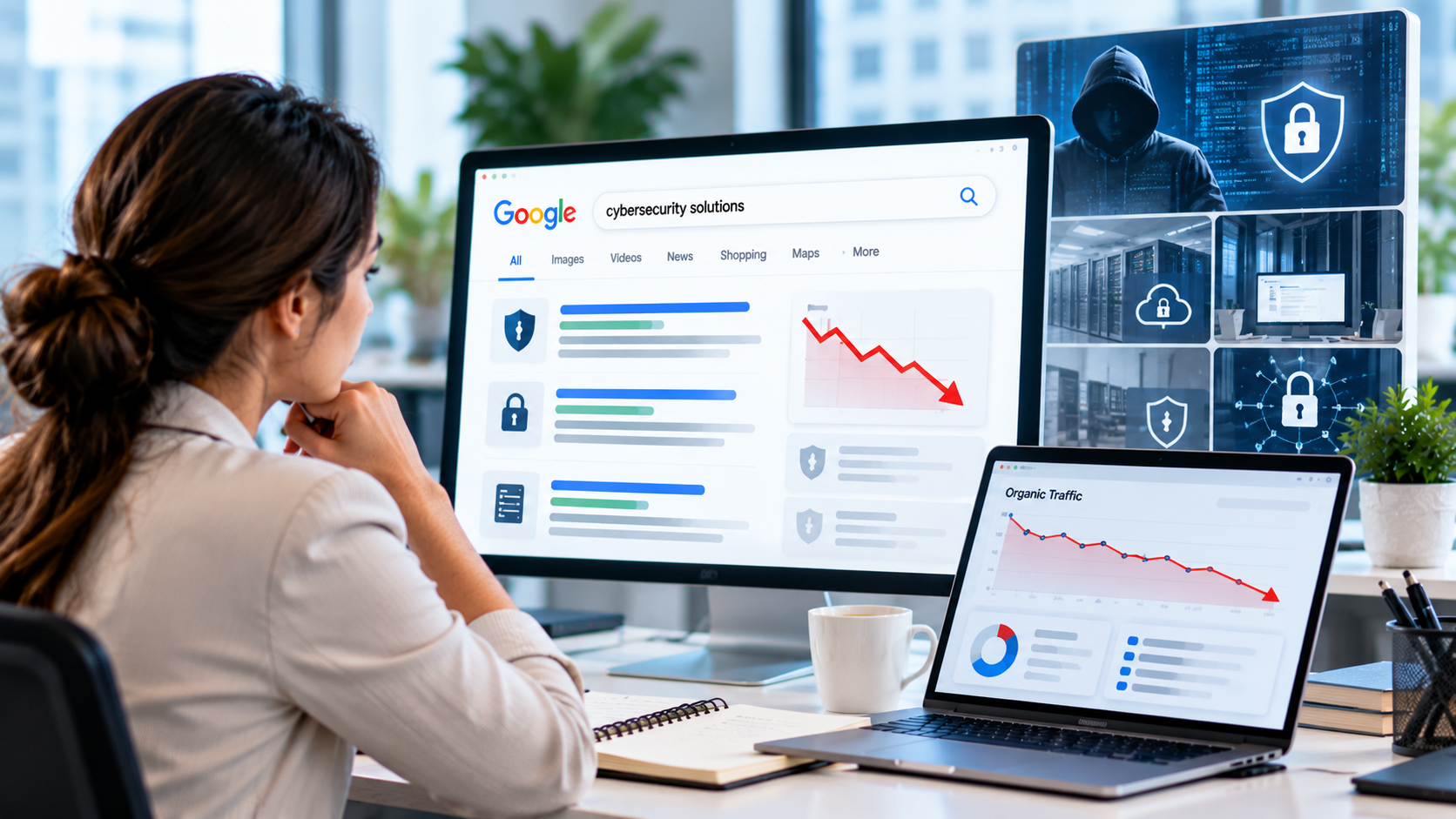
Cybersecurity brands can struggle to rank on Google because they operate in a competitive market where technical accuracy, trust, clear product positioning, and relevant content all matter. Your website may describe advanced security capabilities, but that information will not necessarily attract organic traffic if buyers cannot find it, understand it, or connect it to their specific problems.
Cybersecurity buyers research risks, compare solutions, assess technical requirements, and evaluate vendors before making purchasing decisions. A security operations manager may search for threat detection capabilities, while an IT director may investigate deployment requirements, integration options, and long-term costs.
Your SEO strategy must accommodate these different needs. Instead of relying on broad security keywords or publishing generic articles about cyber threats, build a website that answers specific questions, demonstrates genuine expertise, and guides visitors toward relevant solutions.
Cybersecurity encompasses a wide range of topics, including endpoint protection, cloud security, identity management, threat detection, vulnerability management, and incident response.
Broad keywords in these categories can be difficult to rank for because they attract established security vendors, technology publications, research organizations, and specialist resources.
Competing for every high-volume term is rarely the most efficient approach.
Start by identifying the specific problems your product solves. If you provide cloud security software, relevant opportunities may include cloud misconfiguration detection, cloud access monitoring, identity risk assessment, or security requirements for particular cloud environments.
Evaluate keywords using:
A narrower search may attract fewer visitors but more relevant prospects. The objective is to establish visibility among the audiences your business can serve effectively.
Explore SEO Solutions for Your Business
Cybersecurity websites often publish articles about ransomware, phishing, password security, and data breaches. These topics are relevant, but broad explanations alone may not differentiate your business from thousands of competing resources.
To improve your content, connect security concepts with specific operational questions.
For example, rather than publishing only a general article about cloud security, explain how organizations can assess cloud access permissions, evaluate monitoring requirements, or prepare for a particular implementation challenge.
Useful cybersecurity content can include:
Keep every explanation accurate and appropriate for its audience. A guide for security engineers can use technical terminology, while an executive-focused resource may need to emphasize risk management, business continuity, and decision-making.
The purpose is to make your expertise useful, not merely to increase the number of pages on your website.
A visitor searching for a definition of endpoint detection may not be ready to purchase a security platform. A person searching for endpoint detection and response software comparisons may be much closer to evaluating vendors.
If your product pages target educational searches, or your educational articles attempt to sell immediately, visitors may not find what they need.
Map your keywords to the appropriate content type.
| Search intent | Suitable content |
| Learning about a threat | Educational guides and explainers |
| Understanding a security process | Technical resources and checklists |
| Comparing solutions | Comparison pages and evaluation guides |
| Researching implementation | Integration and deployment documentation |
| Evaluating vendors | Product pages, use cases, and case studies |
Each page should have a clear purpose. Provide enough information to answer the searcher’s question and offer a relevant next step when appropriate.
For example, an article explaining security monitoring could link to a relevant product page for readers who want to explore implementation options.
Cybersecurity companies sometimes maintain large documentation libraries, multiple product sections, customer portals, and resource centers. Poor site architecture can make important information harder to discover.
Technical SEO problems may include broken internal links, duplicate URLs, incorrect canonical tags, blocked resources, redirect errors, and important pages missing from the sitemap.
Review your website systematically.
Confirm that important pages can be crawled and indexed. Check whether your XML sitemap contains the intended canonical URLs. Inspect navigation paths and ensure that product pages link to relevant documentation.
If your site uses JavaScript extensively, verify that search engines can access important content and links. Also review mobile usability, page performance, and server responses.
Avoid assuming that every traffic decline is caused by an algorithm change. A technical issue affecting a product directory or resource library can also reduce organic visibility.
SEOS Firm’s guide to technical SEO and website visibility provides a useful starting point for reviewing these foundations.
Cybersecurity is a trust-sensitive industry. Prospects need confidence that your claims are accurate, your team understands the technology, and your solutions address real security requirements.
Your website should make that evaluation easier.
Depending on what you can verify, provide:
Avoid claiming that your product guarantees complete protection or eliminates all security risks. No security solution can prevent every possible threat under every condition.
Similarly, do not claim compliance with a framework or certification unless the relevant status and scope can be substantiated.
Credibility should come from demonstrable expertise and transparent information rather than unsupported marketing language.
Publishing unrelated articles about different cybersecurity subjects can make it harder to build a coherent resource around your main offerings.
A more focused strategy connects related content into useful topic clusters.
Suppose your company specializes in identity and access management. A relevant content cluster might cover authentication methods, access control policies, identity lifecycle management, privileged access, and common implementation challenges.
Create a central resource that introduces the subject, then develop supporting pages that answer narrower questions.
Link these resources naturally so visitors can move from general education to specific technical guidance and relevant product information.
Do not create multiple pages that repeat the same explanations. Each resource should address a distinct need and contribute something useful to the broader topic.
Topical authority is not a guaranteed ranking formula. However, comprehensive, well-organized resources can help your website serve users more effectively and clarify how its pages relate to one another.
Cybersecurity buyers increasingly encounter search experiences that summarize information and answer questions directly. Clear, accurate content can help your website communicate its expertise across different discovery channels.
Start each major section by addressing the question directly. Then explain the underlying concept, describe relevant considerations, and provide an example when useful.
For instance, an article about vulnerability management could define the process, outline its major stages, explain prioritization criteria, and discuss how organizations monitor remediation.
Use descriptive headings, concise definitions, and accurate terminology. Cite reliable sources for technical claims and keep information current as products, standards, and threats change.
Do not invent AI-specific ranking tricks or promise placement in generated answers. Focus on making your content useful, accessible, and understandable.
For further reading, explore SEOS Firm’s guidance on SEO strategies for Google AI Overviews.
Cybersecurity categories can overlap. A potential customer might have difficulty understanding how your platform differs from endpoint protection, security information and event management, or cloud security tools.
If your product pages use vague claims such as “advanced protection” without explaining the actual capabilities, users may struggle to determine whether the solution meets their requirements.
Clarify:
Where comparisons are appropriate, explain meaningful differences accurately rather than presenting competitors unfairly.
Clear product positioning helps prospective buyers understand the offering and supports more relevant landing pages for specific search intents.
A cybersecurity brand can increase organic traffic without generating more qualified opportunities. Conversely, a specialized page with modest traffic may attract prospects who are highly relevant to the business.
Track both visibility and business outcomes.
| Metric | What it reveals |
| Non-branded organic clicks | Discovery by people unfamiliar with your brand |
| Product-page engagement | Interest in your offerings |
| Demo requests | Potential buying intent |
| Qualified leads | Relevance to your target market |
| Sales opportunities | Contribution to the pipeline |
| Lead-to-customer conversion | Commercial effectiveness |
Use analytics and CRM data where available to connect organic landing pages with sales outcomes.
Review performance by product category, target industry, and search intent. If an educational article attracts the right audience but generates few product interactions, consider whether a relevant next step would improve the experience.
Do not judge every page using the same conversion expectation. Different content types support different stages of the buying journey.
You can begin improving your search visibility with a structured plan.
First, audit your website. Identify indexing issues, weak product pages, outdated resources, and broken internal links.
Second, research buyer questions. Work with security specialists, product teams, and sales staff to identify relevant search opportunities.
Third, prioritize commercial pages. Improve the pages that explain your main products, use cases, and technical capabilities.
Fourth, develop supporting content. Create useful resources around the problems your customers need to solve.
Fifth, strengthen credibility. Review author information, technical accuracy, product claims, and evidence supporting your expertise.
Finally, measure and refine. Monitor organic visibility, qualified leads, and conversions to determine which improvements deserve further investment.
For a broader view of the agency’s approach, visit SEOS Firm’s company and service information.
Cybersecurity brands struggle to rank on Google when their content does not match search intent, technical problems restrict discovery, or their expertise is difficult to evaluate. Broad keywords and generic articles can also make it harder to distinguish a brand from established competitors.
Focus on your strongest areas of expertise. Improve technical accessibility, develop precise product pages, build connected topic clusters, and support your claims with accurate evidence.
A consistent strategy can help your website become more useful to security professionals and more discoverable to potential buyers.
CTA Button 1: Explore SEO Solutions for Your Business
CTA Button 2: Contact SEOS Firm — verify destination availability before publishing.
Cybersecurity attracts established vendors, technical publications, research organizations, and specialist websites. Strong competition makes relevant content, technical accessibility, and credible expertise particularly important.
Target searches relevant to your products, applications, security challenges, implementation requirements, and buyer comparisons. Prioritize relevance and commercial value rather than search volume alone.
Technical content can help when it answers real questions accurately and matches user intent. Clear explanations, practical guidance, and credible sources make resources more useful to specialist audiences.
Provide qualified authorship, accurate technical documentation, verified product information, relevant certifications, and genuine customer evidence where available. Avoid unsupported claims about security or compliance.
Timelines vary according to competition, website condition, resources, and implementation quality. Some technical improvements can be observed relatively quickly, while sustained organic growth commonly requires several months or longer.